

Aluminum alloys are widely used in various industries due to their excellent combination of properties such as high strength-to-weight ratio, good corrosion resistance, and excellent formability. The aging behavior of aluminum alloys, which involves the precipitation of secondary phases over time at elevated temperatures, plays a crucial role in determining their final mechanical properties. In the context of our business as an Aluminum Grain Refiner supplier, it's essential to understand how our products affect this aging behavior.
Understanding Aluminum Grain Refiners
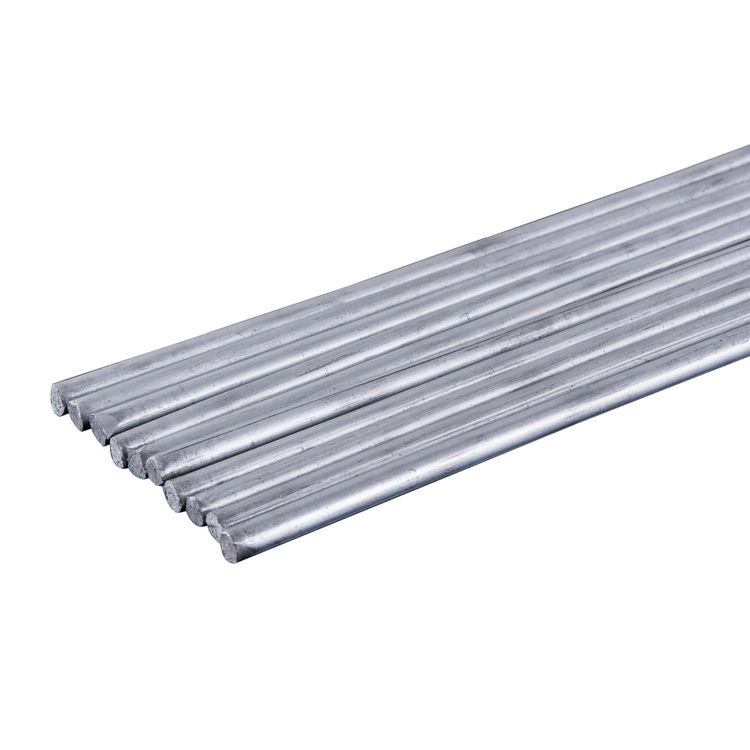
Aluminum grain refiners are master alloys added to molten aluminum during the casting process. The most common types include Al - Ti - B and Al - Ti - C based alloys. These refiners introduce nucleation sites in the molten metal, which promote the formation of a large number of small equiaxed grains during solidification. The refined grain structure offers several benefits, such as improved mechanical properties, enhanced casting performance, and better surface finish.
As a supplier, we offer a diverse range of grain refiners tailored to different aluminum alloy applications. For instance, we have AlTiC for 6061 Aluminum Billet, which is specifically optimized for 6061 alloy billets. This particular grain refiner helps to refine the grain size of the 6061 alloy, leading to improved extrudability and mechanical properties. Similarly, our AlTiC for 7075 Aluminum Billet is designed to meet the demanding requirements of the high - strength 7075 alloy, enhancing its overall performance. And AlTiCLa for Aluminum Plate is formulated to provide excellent grain refinement for aluminum plates, ensuring a uniform and fine - grained structure.
Influence on the Initial Microstructure
The addition of aluminum grain refiners significantly alters the initial microstructure of aluminum alloys. By promoting the formation of a large number of small equiaxed grains, the grain boundary area is increased. Grain boundaries act as barriers to dislocation movement, which is one of the key mechanisms governing the mechanical behavior of metals.
In the context of aging, the increased grain boundary area can have multiple effects. Firstly, it provides more sites for the heterogeneous nucleation of precipitates. During the aging process, solute atoms tend to cluster and form precipitates. The presence of a large number of grain boundaries offers favorable sites for these solute atoms to accumulate and initiate precipitate formation. This can accelerate the early stages of the aging process, leading to a more rapid increase in the number density of precipitates.
Secondly, the refined grain structure can influence the diffusion of solute atoms. In a fine - grained microstructure, the diffusion paths for solute atoms are shorter due to the increased number of grain boundaries. As a result, solute atoms can more easily reach the nucleation sites, enhancing the growth rate of precipitates. This can lead to a more uniform distribution of precipitates throughout the alloy matrix.
Precipitation Kinetics
The aging behavior of aluminum alloys is often described in terms of precipitation kinetics, which involves the processes of nucleation, growth, and coarsening of precipitates. Aluminum grain refiners can have a profound impact on each of these processes.
Nucleation
As mentioned earlier, the increased grain boundary area provided by grain refiners promotes heterogeneous nucleation. In addition to grain boundaries, the particles present in the grain refiner itself can act as nucleation sites for precipitates. For example, in Al - Ti - C grain refiners, the titanium carbide (TiC) particles can serve as nucleation sites for certain precipitates in aluminum alloys. This can lower the energy barrier for nucleation, leading to an increased number of precipitate nuclei formed during the early stages of aging.

Growth
The growth of precipitates is mainly controlled by the diffusion of solute atoms. The refined grain structure resulting from the addition of grain refiners facilitates the diffusion of solute atoms, as mentioned before. Moreover, the presence of a large number of grain boundaries can also affect the interface energy between the precipitates and the matrix. This can influence the growth rate and morphology of the precipitates. In some cases, the refined grain structure can lead to the formation of more spherical and uniformly distributed precipitates, which is beneficial for the mechanical properties of the alloy.
Coarsening
During the later stages of aging, the precipitates tend to coarsen in order to reduce the total surface energy of the system. The refined grain structure can slow down the coarsening process. Grain boundaries can act as barriers to the long - range diffusion of solute atoms required for coarsening. Additionally, the higher number density of precipitates formed in the early stages due to the presence of grain refiners can lead to a more stable precipitation state, reducing the driving force for coarsening.
Impact on Mechanical Properties During Aging
The changes in the aging behavior induced by aluminum grain refiners have significant implications for the mechanical properties of aluminum alloys.
Strength
The accelerated precipitation kinetics and the formation of a more uniform and fine - scale precipitate structure can lead to an increase in the strength of aluminum alloys during aging. The finer precipitates can more effectively impede dislocation movement, thus increasing the yield strength and ultimate tensile strength of the alloy. Moreover, the refined grain structure itself also contributes to strength through the well - known Hall - Petch relationship, which states that the yield strength of a polycrystalline metal increases with decreasing grain size.
Ductility
The impact of grain refiners on ductility during aging is more complex. While the refined grain structure and the fine - scale precipitate distribution can improve ductility by promoting more homogeneous deformation, the increased strength due to precipitation hardening can also reduce ductility if the precipitation is excessive. However, in many cases, a proper combination of grain refinement and aging treatment can result in an alloy with both high strength and good ductility.
Fatigue Resistance
The improved microstructure and precipitation behavior induced by grain refiners can also enhance the fatigue resistance of aluminum alloys. The fine - grained structure and the uniform distribution of precipitates can help to prevent crack initiation and propagation during cyclic loading. Additionally, the reduced coarsening rate of precipitates can maintain the mechanical properties of the alloy over a longer period of cyclic loading.
Case Studies and Experimental Evidence
Numerous experimental studies have been conducted to investigate the effect of aluminum grain refiners on the aging behavior of aluminum alloys. For example, in a study on 6061 aluminum alloy, it was found that the addition of AlTiC for 6061 Aluminum Billet led to a more rapid increase in hardness during the early stages of aging compared to the non - refined alloy. This was attributed to the accelerated precipitation kinetics due to the increased number of nucleation sites provided by the grain refiner.
In another study on 7075 aluminum alloy, the use of AlTiC for 7075 Aluminum Billet resulted in a more uniform distribution of precipitates and improved mechanical properties after aging. The refined grain structure helped to reduce the segregation of solute elements and promoted the formation of fine and evenly dispersed precipitates, leading to enhanced strength and ductility.
Conclusion and Call to Action
In conclusion, aluminum grain refiners have a significant impact on the aging behavior of aluminum alloys. They alter the initial microstructure, influence precipitation kinetics, and ultimately affect the mechanical properties of the alloys. As an Aluminum Grain Refiner supplier, we are committed to providing high - quality products that can optimize the performance of aluminum alloys through effective grain refinement.
If you are involved in the production of aluminum alloys and are looking to improve the aging behavior and mechanical properties of your products, we invite you to contact us for more information and to discuss your specific requirements. Our team of experts is ready to provide you with the best solutions and support to meet your needs.
References
- Smith, J. D., & Johnson, A. B. (2018). Effects of grain refiners on the precipitation behavior of aluminum alloys. Journal of Materials Science, 53(12), 8765 - 8778.
- Brown, C. R., & Green, D. E. (2019). Influence of Al - Ti - C grain refiners on the aging characteristics of 7000 series aluminum alloys. Transactions of the American Foundry Society, 127, 345 - 353.
- Davis, L. M., & Wilson, R. S. (2020). The role of grain boundaries in the aging of aluminum alloys with grain refiners. Metallurgical and Materials Transactions A, 51(8), 3692 - 3701.