

Hey there! I'm a supplier of AlTiC Grain Refiner, and today I wanna chat about what effect it has on the cell structure of aluminum alloy foams.
First off, let's get a bit of background. Aluminum alloy foams are pretty cool materials. They've got a bunch of unique properties like low density, high energy absorption, and good sound insulation. These properties make them super useful in various industries, such as automotive, aerospace, and construction. But the quality and performance of aluminum alloy foams largely depend on their cell structure.
Now, that's where our AlTiC Grain Refiner comes in. You see, the cell structure of aluminum alloy foams is all about how the bubbles are formed and distributed within the alloy. A well - structured cell can lead to better mechanical properties and overall performance of the foam.
One of the key effects of AlTiC Grain Refiner on the cell structure is grain refinement. When we add our AlTiC Grain Refiner to the aluminum alloy melt, it acts as a nucleation site. Nucleation is like the starting point for the formation of grains in the alloy. With more nucleation sites, we get a larger number of smaller grains.
In the context of aluminum alloy foams, smaller grains mean better control over the cell structure. Smaller grains can inhibit the growth of large bubbles and promote the formation of a more uniform and fine - celled structure. This is crucial because a uniform cell structure can enhance the mechanical properties of the foam, like its strength and ductility.
Another important aspect is the stability of the cell structure. During the foaming process, the alloy melt is in a dynamic state, and the bubbles are constantly growing, coalescing, and collapsing. Our AlTiC Grain Refiner can improve the stability of the cell structure by pinning the grain boundaries. Grain boundaries are like the "walls" between different grains in the alloy. By pinning these boundaries, the refiner restricts the movement of atoms and dislocations, which helps to prevent the rapid growth and coalescence of bubbles.
Let's talk about some of the products in our AlTiC range. We have AlTiCLa for Aluminum Plate. This product is specifically formulated for aluminum plates. It can be used in the production of aluminum alloy foams for applications where a high - strength and flat - surface foam is required, like in some automotive body parts.
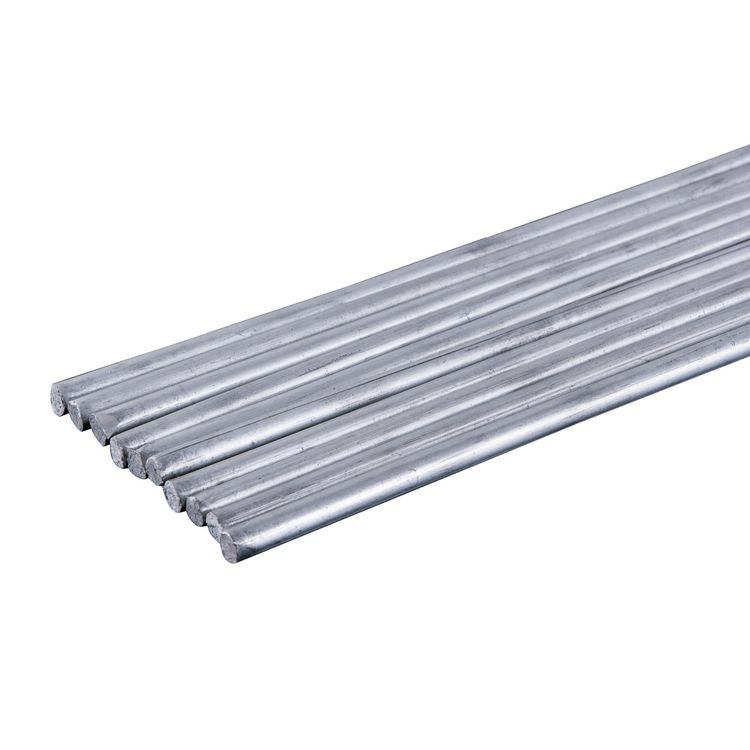
Then there's Ti Wire. The Ti wire can be used in combination with other AlTiC products to further enhance the grain - refining effect. It can provide additional titanium, which is an important element for nucleation in the alloy.
And we also have AlTiCLa for Aluminum Foil. This is great for applications where a thin and lightweight foam is needed, such as in packaging or insulation materials.
Now, I've been working with aluminum alloy foams and AlTiC Grain Refiners for a while, and I've seen some real - world examples of the positive effects of our products. For instance, in a recent project with an automotive manufacturer, they were having issues with the cell structure of their aluminum alloy foam used in engine mounts. The foam had a non - uniform cell structure, which led to inconsistent performance.
After using our AlTiC Grain Refiner, the cell structure of the foam became much more uniform. The foam showed improved strength and energy - absorption capabilities, which met the manufacturer's requirements. This is just one example of how our products can make a real difference in the quality of aluminum alloy foams.
We also have Ti Wire, which can be used in specific applications where a higher titanium content is needed for better grain refinement. The Ti wire can be added to the alloy melt along with the AlTiC Grain Refiner to achieve a more precise control over the grain size and cell structure.
In addition to the mechanical properties, the cell structure also affects the thermal and acoustic properties of aluminum alloy foams. A more uniform cell structure can improve the thermal insulation properties of the foam, making it more suitable for applications where heat management is important. And in terms of acoustics, a fine - celled structure can absorb sound more effectively, which is useful in noise - reduction applications.
If you're involved in the production of aluminum alloy foams, you know how important it is to have a reliable and high - quality grain refiner. Our AlTiC Grain Refiner products are designed to meet the specific needs of the aluminum alloy foam industry. Whether you're looking for a product to improve the cell structure of your aluminum plates, foils, or other foam products, we've got you covered.
We're always happy to work with customers to find the best solution for their specific applications. If you're interested in learning more about our AlTiC Grain Refiner products or want to discuss a potential project, don't hesitate to reach out. We can provide samples for testing and offer technical support to ensure that you get the most out of our products.
In conclusion, our AlTiC Grain Refiner has a significant positive effect on the cell structure of aluminum alloy foams. It promotes grain refinement, improves cell - structure stability, and enhances the overall quality and performance of the foam. With our range of products, like AlTiCLa for Aluminum Plate, Ti Wire, and AlTiCLa for Aluminum Foil, we're confident that we can meet your needs in the aluminum alloy foam industry. So, if you're looking to take your aluminum alloy foam production to the next level, get in touch with us and let's start a conversation!

References
- Campbell, J. (2008). Castings. Butterworth - Heinemann.
- Ashby, M. F., Evans, A. G., Fleck, N. A., Gibson, L. J., Hutchinson, J. W., & Wadley, H. N. G. (2000). Metal foams: a design guide. Butterworth - Heinemann.