

As a supplier of AlTiCLa for Aluminum Plate, I've had the privilege of witnessing firsthand how this remarkable alloying addition can transform the properties of aluminum plates. In this blog, I'll explore the types of aluminum plates that are most suitable for using AlTiCLa, delving into the science behind its effectiveness and sharing practical insights based on my experience in the industry.
Understanding AlTiCLa and Its Benefits
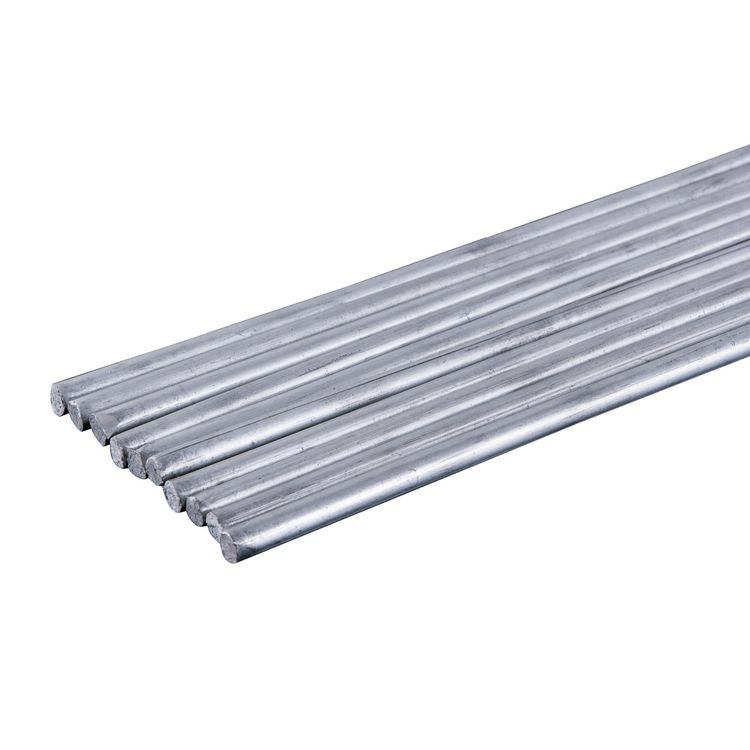
Before we dive into the specific types of aluminum plates, let's briefly understand what AlTiCLa is and why it's so valuable in aluminum processing. AlTiCLa is an aluminum-titanium-carbon-lanthanum master alloy, which serves as a powerful grain refiner and modifier for aluminum and its alloys. When added to molten aluminum, it promotes the formation of fine, equiaxed grains, which in turn improves the mechanical properties, such as strength, ductility, and toughness, of the final aluminum product. Additionally, AlTiCLa can enhance the surface finish, reduce porosity, and improve the weldability of aluminum plates.
Types of Aluminum Plates Suitable for AlTiCLa
1. 1xxx Series Aluminum Plates
The 1xxx series aluminum plates are pure aluminum plates with a minimum aluminum content of 99%. These plates are known for their excellent corrosion resistance, high thermal and electrical conductivity, and good formability. However, they have relatively low strength compared to other aluminum alloys. By adding AlTiCLa to 1xxx series aluminum plates, we can refine the grain structure, thereby increasing the strength without sacrificing the other desirable properties. This makes them more suitable for applications where both corrosion resistance and moderate strength are required, such as chemical processing equipment, heat exchangers, and electrical conductors. AlTiCLa for Aluminum Plate
2. 3xxx Series Aluminum Plates
The 3xxx series aluminum plates are alloyed with manganese, which provides moderate strength and good formability. These plates are commonly used in applications such as roofing, siding, and automotive parts. AlTiCLa can be particularly beneficial for 3xxx series aluminum plates as it can further improve their strength and reduce the tendency for cracking during forming processes. The refined grain structure also enhances the surface finish of the plates, making them more aesthetically appealing.
3. 5xxx Series Aluminum Plates
The 5xxx series aluminum plates are alloyed with magnesium, which gives them high strength, good corrosion resistance, and excellent weldability. These plates are widely used in marine applications, such as boat hulls and decks, as well as in automotive and aerospace industries. When AlTiCLa is added to 5xxx series aluminum plates, it refines the grain size, resulting in improved mechanical properties, especially in terms of toughness and fatigue resistance. This is crucial for applications where the plates are subjected to dynamic loading and harsh environmental conditions.
4. 6xxx Series Aluminum Plates
The 6xxx series aluminum plates are alloyed with magnesium and silicon, which provides a good combination of strength, formability, and corrosion resistance. These plates are commonly used in architectural applications, such as window frames and curtain walls, as well as in automotive and aerospace components. AlTiCLa can enhance the precipitation hardening response of 6xxx series aluminum plates, leading to higher strength and better mechanical properties. The refined grain structure also improves the machinability of the plates, making them easier to process into complex shapes.
The Science Behind AlTiCLa's Effectiveness
The effectiveness of AlTiCLa in refining the grain structure of aluminum plates can be attributed to its unique chemical composition and the way it interacts with the molten aluminum. Titanium and carbon in AlTiCLa form titanium carbide (TiC) particles, which act as heterogeneous nucleation sites during solidification. These TiC particles provide a large number of nuclei for the growth of aluminum grains, resulting in a finer and more uniform grain structure. Lanthanum, on the other hand, can modify the surface tension and wetting properties of the molten aluminum, promoting the dispersion of TiC particles and enhancing their nucleation efficiency.

Practical Considerations for Using AlTiCLa
When using AlTiCLa in aluminum plate production, there are several practical considerations to keep in mind. First, the addition rate of AlTiCLa needs to be carefully controlled to achieve the desired grain refinement effect. Too little AlTiCLa may not provide sufficient nucleation sites, while too much can lead to the formation of large TiC particles, which can have a negative impact on the mechanical properties of the plates. Second, the melting and casting processes need to be optimized to ensure the uniform distribution of AlTiCLa in the molten aluminum. This may involve proper stirring and holding times to allow the AlTiCLa to fully dissolve and disperse in the melt.
Comparison with Other Grain Refiners
While there are other grain refiners available in the market, such as AlTiC for Aluminium Alloy Billet AlTiC for Aluminium Alloy Billet, AlTiCLa offers several advantages. AlTiCLa contains lanthanum, which can further enhance the nucleation efficiency and modify the grain growth behavior compared to traditional AlTiC grain refiners. This results in a finer and more uniform grain structure, leading to better mechanical properties and surface finish of the aluminum plates. Additionally, AlTiCLa has a wider processing window, which means it can be used in a broader range of aluminum alloys and casting conditions.
Applications of Aluminum Plates with AlTiCLa
The aluminum plates treated with AlTiCLa have a wide range of applications across various industries. In the automotive industry, they can be used for manufacturing body panels, engine components, and suspension parts, where high strength and light weight are crucial. In the aerospace industry, these plates can be used for aircraft structures, such as wings and fuselages, due to their excellent mechanical properties and corrosion resistance. In the construction industry, they can be used for building facades, roofing, and interior decoration, thanks to their good formability and aesthetic appeal.
AlTiCLa for Aluminum Foil
It's worth mentioning that AlTiCLa is not only suitable for aluminum plates but also for aluminum foil. AlTiCLa for Aluminum Foil When used in aluminum foil production, AlTiCLa can refine the grain structure, improve the strength and ductility of the foil, and reduce the occurrence of pinholes. This makes the aluminum foil more suitable for applications such as food packaging, electrical insulation, and heat shielding.
Conclusion
In conclusion, AlTiCLa is a highly effective grain refiner and modifier for aluminum plates. It can be used with various types of aluminum plates, including 1xxx, 3xxx, 5xxx, and 6xxx series, to improve their mechanical properties, surface finish, and processability. The unique chemical composition of AlTiCLa, with the addition of lanthanum, provides several advantages over traditional grain refiners. Whether you're in the automotive, aerospace, construction, or packaging industry, aluminum plates treated with AlTiCLa can offer significant benefits for your applications.
If you're interested in learning more about our AlTiCLa products or discussing how they can be used in your specific aluminum plate production process, please feel free to reach out. We're here to provide you with the technical support and high-quality products you need to achieve the best results.
References
- Davis, J. R. (Ed.). (2001). Aluminum and Aluminum Alloys. ASM International.
- Hatch, J. E. (Ed.). (1984). Aluminum: Properties and Physical Metallurgy. ASM International.
- Li, Y., & Zhang, L. (2018). Effect of AlTiCLa Master Alloy on the Grain Refinement of Aluminum Alloys. Journal of Materials Science and Technology, 34(11), 1975-1981.