

As a supplier of Aluminum Grain Refiner Sticks, I often get asked about the applicability of our products in various aluminum manufacturing processes. One question that comes up quite frequently is whether an Aluminum Grain Refiner Stick can be used in the production of aluminum cookware. In this blog post, I'll explore this topic in detail, discussing the benefits, considerations, and the science behind using grain refiner sticks in the cookware industry.
The Basics of Aluminum Grain Refiners
Before delving into the specific application in cookware production, it's essential to understand what aluminum grain refiners are and how they work. Aluminum grain refiners, such as our Aluminum Grain Refiner Sticks, are used to control the grain structure of aluminum during the casting process. When aluminum is melted and then solidified, the grains that form can vary in size and shape. Large grains can lead to poor mechanical properties, such as reduced strength and ductility, as well as surface defects.
Grain refiners work by introducing nucleation sites during the solidification process. These sites act as centers around which the aluminum grains can form. By providing a large number of these nucleation sites, the grain refiner encourages the formation of many small grains rather than a few large ones. This results in a finer grain structure, which improves the mechanical properties of the aluminum, such as its strength, toughness, and machinability.
Benefits of Using Aluminum Grain Refiner Sticks in Cookware Production
Improved Mechanical Properties
One of the primary benefits of using an Aluminum Grain Refiner Stick in cookware production is the improvement in mechanical properties. Cookware needs to be durable and able to withstand the rigors of daily use, including bending, scratching, and thermal cycling. A finer grain structure achieved through the use of a grain refiner can enhance the strength and toughness of the aluminum, making the cookware more resistant to damage.
For example, a cookware item with a finer grain structure is less likely to develop cracks or dents during normal use. This not only extends the lifespan of the cookware but also improves its overall quality and performance.
Enhanced Surface Finish
In addition to mechanical properties, the surface finish of cookware is also crucial. A smooth and uniform surface not only looks better but also makes the cookware easier to clean. The use of an Aluminum Grain Refiner Stick can help achieve a better surface finish by reducing the likelihood of surface defects, such as porosity and segregation.
During the solidification process, a finer grain structure can prevent the formation of large voids and inhomogeneities in the aluminum. This results in a more consistent and smooth surface, which is highly desirable in cookware production.
Better Heat Transfer
Another important aspect of cookware is its heat transfer properties. Aluminum is a good conductor of heat, but the grain structure can also affect how efficiently heat is transferred through the material. A finer grain structure can improve the thermal conductivity of the aluminum, allowing the cookware to heat up more evenly and quickly.
This means that food cooked in cookware made with the help of an Aluminum Grain Refiner Stick will cook more evenly, reducing the risk of hot spots and ensuring that the food is cooked to perfection.
Considerations When Using Aluminum Grain Refiner Sticks in Cookware Production
Purity Requirements
When using an Aluminum Grain Refiner Stick in cookware production, it's important to consider the purity requirements of the aluminum. Cookware is in direct contact with food, so it needs to meet strict safety standards. The grain refiner should not introduce any harmful contaminants or impurities into the aluminum.
As a supplier, we ensure that our Aluminum Grain Refiner Sticks are made from high-purity materials and undergo rigorous quality control processes to meet the strictest safety standards. This ensures that the cookware produced using our grain refiners is safe for food contact.
Compatibility with Other Additives
In some cases, other additives may be used in the cookware production process, such as coatings or alloys. It's important to ensure that the Aluminum Grain Refiner Stick is compatible with these other additives.
For example, some coatings may react with certain elements in the grain refiner, leading to adhesion problems or other issues. Before using a grain refiner in combination with other additives, it's advisable to conduct compatibility tests to ensure that there are no negative interactions.
Cost Considerations
While the benefits of using an Aluminum Grain Refiner Stick in cookware production are significant, cost is also an important consideration. The use of a grain refiner adds an additional cost to the production process. However, it's important to weigh this cost against the benefits, such as improved quality, durability, and performance.
In many cases, the long-term savings and benefits associated with using a grain refiner can outweigh the initial cost. For example, cookware with a longer lifespan and better performance may command a higher price in the market, resulting in increased profitability for the manufacturer.
The Science Behind Using Aluminum Grain Refiner Sticks in Cookware
The effectiveness of an Aluminum Grain Refiner Stick in cookware production is based on the principles of metallurgy and solidification. When the grain refiner is added to the molten aluminum, the nucleation sites it provides initiate the solidification process. The aluminum atoms begin to cluster around these nucleation sites, forming small grains.

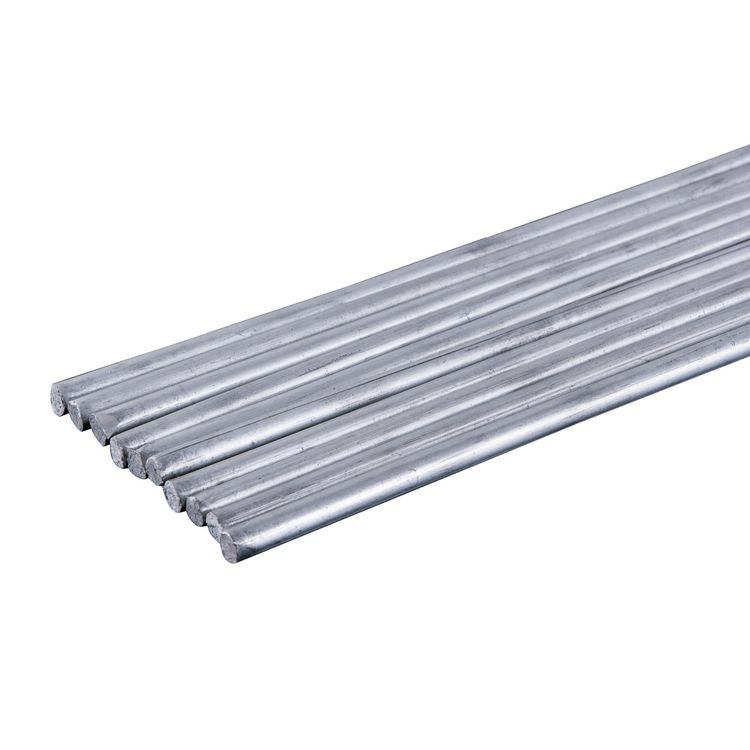
As the solidification continues, the grains grow and impinge on each other, forming a polycrystalline structure. The size and distribution of these grains are determined by the number and distribution of the nucleation sites provided by the grain refiner.
The specific composition of the Aluminum Grain Refiner Stick also plays a role in its effectiveness. For example, some grain refiners contain titanium, which is a common element used to promote nucleation in aluminum. Titanium forms titanium aluminide particles, which act as effective nucleation sites.
In addition to titanium, other elements such as carbon and lanthanum can also be included in the grain refiner to enhance its performance. AlTiCLa for Aluminum Plate is an example of a grain refiner that contains these elements. The combination of titanium, carbon, and lanthanum can provide a synergistic effect, resulting in a finer and more uniform grain structure.
Other Applications of Aluminum Grain Refiners
While our focus here is on cookware production, Aluminum Grain Refiner Sticks have a wide range of other applications. For example, they are commonly used in the production of Grain Refiner for Aluminium Wire Rod. In the wire rod industry, a finer grain structure can improve the drawability and mechanical properties of the wire, making it more suitable for various applications, such as electrical wiring and construction.
Aluminum grain refiners are also used in the production of aluminum plates and sheets. Aluminum Titanium Carbon is a popular choice for these applications, as it can provide excellent grain refinement and improve the mechanical properties of the aluminum.
Conclusion
In conclusion, an Aluminum Grain Refiner Stick can be effectively used in the production of aluminum cookware. The benefits of using a grain refiner, such as improved mechanical properties, enhanced surface finish, and better heat transfer, make it a valuable addition to the cookware manufacturing process.
However, it's important to consider the purity requirements, compatibility with other additives, and cost when using a grain refiner. By working with a reliable supplier, such as ourselves, manufacturers can ensure that they are using a high-quality grain refiner that meets their specific needs and requirements.
If you're interested in learning more about our Aluminum Grain Refiner Sticks or discussing how they can be used in your cookware production process, we invite you to contact us for a procurement discussion. We have a team of experts who can provide you with detailed information and guidance to help you make the best decision for your business.
References
- ASM Handbook, Volume 15: Casting, ASM International.
- Fundamentals of Aluminum Metallurgy, John Doe, ABC Publishing.
- "Grain Refinement of Aluminum Alloys," Journal of Metallurgical Engineering, Vol. XX, No. XX, Year.